What is TWADIT?

The Way we've Always Done IT
The hidden killer of innovation
TWA·DIT (pronounced TWAH-dit)
noun | ORGANIZATIONAL BEHAVIOR
plural noun: TWADITs
Definition
TWADIT™
A shorthand for "The Way we've Always Done IT."
TWADIT is ingrained behavioral and organizational muscle memory that keeps people repeating outdated processes even after those processes stop producing results. It operates like a cultural immune system, systematically resisting better ways of working because they conflict with what feels familiar and safe.
TWADIT sits at the core of the Stuck Quadrant in the Thrive-Stuck Framework™, acting as the underlying force that keeps people and organizations trapped in patterns that no longer generate value.
In simple terms
TWADIT is organizational muscle memory that keeps people repeating what no longer works, reinforced by a cultural immune system that resists change even as results decline.
— Jovel Cipriano, Creator of TWADIT™, 2026
Common TWADIT Phrases
"We've Always Done It This Way"
"That's Not How We Do Things Here"
"If It Ain't Broke Don't Fix It"
"We tried that before. It didn't work."
"Our clients expect it this way."
How TWADIT Shows Up in the Real World
- "The board rejected the digital transformation proposal. Classic TWADIT."
- "We spend six weeks on a strategic plan that nobody references until the next planning cycle."
- "We hired a Chief Innovation Officer, then TWADIT'd every idea she brought to the table."
- "New hires stop suggesting improvements after about 90 days. TWADIT trains them out of it."
- "We have a suggestion box. It's been there since 2011. Nothing has ever come from it."
What TWADIT Looks Like in Practice
- Rejecting an AI tool before running a single pilot
- Running a six-week planning cycle that produces a report no one acts on
- Protecting a legacy workflow long after it stopped creating value
- Onboarding new hires into old habits before they can bring fresh perspectives
- Keeping a policy no one can explain the origin of but everyone follows
Origin of the Concept
The term TWADIT was coined by Jovel Cipriano in 2026 as part of the Thrive-Stuck Framework™, a strategic model explaining why people and organizations either build momentum or become trapped in stagnation.
The word had always existed in boardrooms, team meetings, and annual planning cycles. Nobody had named it. Once named, it became impossible to ignore.
TWADIT is not just a business concept. It shows up anywhere people protect familiar systems longer than those systems deserve: in companies, institutions, teams, and leadership decisions at every level.
It relates closely to concepts like
Common Signs of TWADIT Inside Organizations
TWADIT typically shows up in recognizable patterns
1. The Pilot Rejection Pattern
New tools or ideas are rejected before testing because they feel unfamiliar.
Example: An AI tool is dismissed in the first meeting without running a small experiment.
2. The Ritual Process Pattern
Processes continue even after everyone knows they create little value.
Example: Six weeks of planning meetings produce a report nobody reads.
3. The Legacy Protection Pattern
People defend outdated systems because they built them.
Example: A team protects an old workflow long after a faster alternative exists.
4. The Authority Shield Pattern
Ideas are rejected simply because they challenge how leaders prefer to operate.
Example: A proposal is dismissed with: “That’s not how we do things here.”
These four patterns are identified within the Thrive-Stuck Framework by Jovel Cipriano as expressions of TWADIT in action.
Why TWADIT Is
So Dangerous
It doesn't feel like resistance. It feels like just the way things are. That's exactly why it's so hard to fight.
- Talented people leave when their ideas keep getting shut down
- Competitors pull ahead because they're not stuck defending old decisions
- Companies keep paying for processes that haven't earned their place in years
Left unchallenged, TWADIT turns organizations into defenders of the past instead of builders of the future.
The opposite of TWADIT is not reckless change.
It is the willingness to test ways before defending old ones.
TWADIT rarely kills progress loudly. It suffocates it quietly. One familiar habit at a time.
-Jovel Cipriano
How Leaders Break the TWADIT Trap
Leaders reduce TWADIT by
- encouraging small experiments
- rewarding evidence over tradition
- protecting dissenting ideas
- testing before rejecting
TWADIT FAQs
Common questions about the concept
TWADIT™ is a shorthand for "The Way We've Always Done It." It is organizational muscle memory that keeps people repeating what no longer works, reinforced by a cultural immune system that resists change even as results decline.
TWADIT was coined by Jovel Cipriano in 2026 as part of the Thrive-Stuck Framework™.
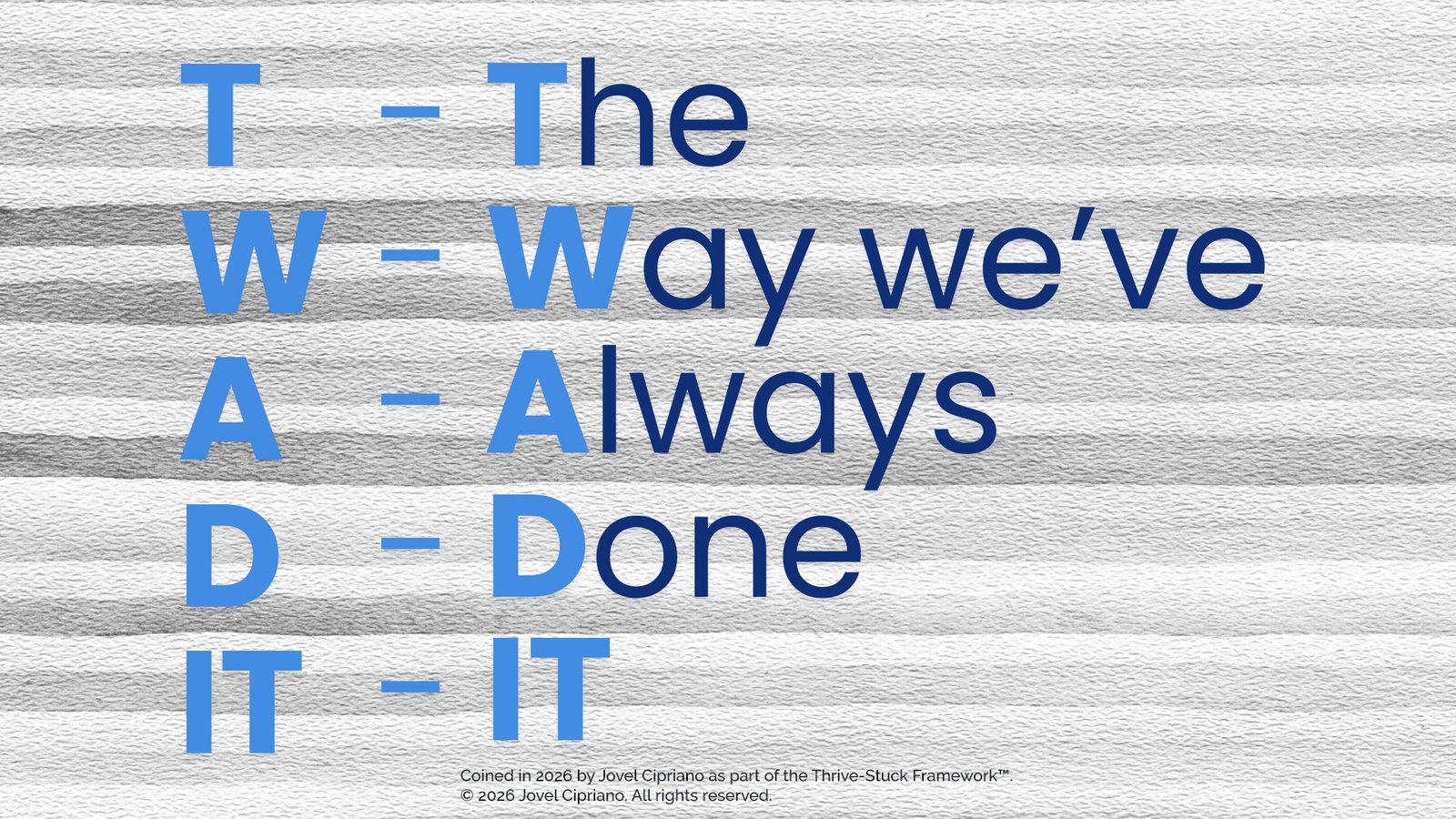
TWADIT stands for “The Way We’ve Always Done It.” :
- T – The
- W – Way we've
- A – Always
- D – Done
- IT – It
The term was coined to give a name to a pattern that shows up in teams, companies, and institutions when familiar habits overpower better ways of working.
The TWADIT Trap is the pattern of getting stuck in outdated ways of thinking and working because familiar methods feel safer, more comfortable, or more proven. It is what happens when habit defeats adaptation.
TWADIT was coined by Jovel Cipriano in 2026 as part of the Thrive-Stuck Framework™. The term was created to describe the hidden force behind many forms of organizational stagnation and resistance to change.
Not all resistance to change is bad. Some change deserves scrutiny. TWADIT is different because it is not thoughtful scrutiny. It is reflexive attachment to familiar ways of working, even when those ways no longer work.
TWADIT often shows up in phrases like “We’ve always done it this way,” “That’s not how we do things here,” and “If it ain’t broke, don’t fix it.” It also shows up in behavior. New ideas get dismissed too early, old reports survive even when nobody uses them, and teams talk about innovation while protecting the same routines.
TWADIT shows up in four recognizable patterns.
- The Pilot Rejection Pattern: new tools or ideas are rejected before testing because they feel unfamiliar.
- The Ritual Process Pattern: processes continue even after everyone knows they create little value.
- The Legacy Protection Pattern: people defend outdated systems because they built them.
- The Authority Shield Pattern: ideas are rejected simply because they challenge how leaders prefer to operate.
Examples of TWADIT include rejecting an AI tool before running a real pilot, keeping a six-week planning process that produces reports nobody reads, or defending legacy workflows long after they have stopped creating value. TWADIT is not just resistance. It is loyalty to old processes that no longer deserve it.
People cling to old processes because familiar systems feel safer than uncertain ones. Old ways also protect status, identity, expertise, and control. TWADIT names that pull toward familiarity, especially when people would rather preserve what they know than face the discomfort of change.
TWADIT sits at the heart of the Stuck Quadrant in the Thrive-Stuck Framework™. It helps explain why people and organizations fall into stuck patterns and why archetypes such as Resistors, Paralyzed, Skeptics, and Spectators emerge. TWADIT names the force. The Thrive-Stuck Framework shows what that force produces.
Leaders break the TWADIT Trap by challenging legacy assumptions, testing better ways of working in real conditions, and rewarding evidence over habit. The goal is not to reject everything old. The goal is to stop protecting processes that no longer work just because they feel familiar.
The longer a process goes unquestioned, the more it costs and the less anyone notices.
-Jovel Cipriano
TWADIT Named.
Now Here's How to Eliminate It.
If you can name it, you can fight it.
Thrive Not Stuck gives you the diagnostic playbook to identify where TWADIT is hiding in your organization and what to do about it.
A practical guide for leaders who choose to stay relevant.
Launching December 2026. First 50 pre-orders receive signed copies.
About the Author

Jovel Cipriano coined the term TWADIT™ in 2026 as part of the Thrive-Stuck Framework™, a strategic model explaining why organizations either build momentum or become trapped in stagnation.
Learn more at jovelcipriano.com
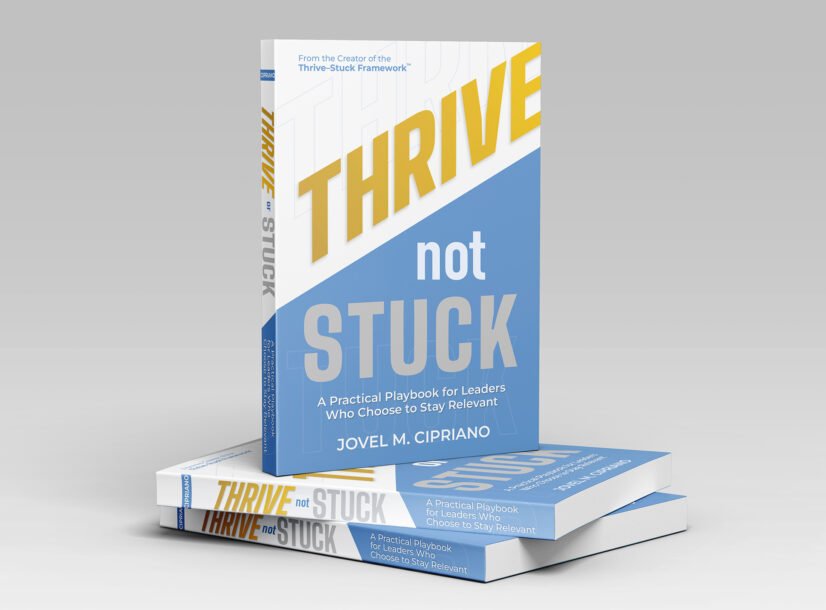
Thrive Not Stuck: A Practical Playbook for Leaders Who Choose to Stay Relevant
Break the
TWADIT Trap now!
Company
Home
About
Services
Contact
Terms & Policies
Privacy Policy
Terms & Conditions
Explore
Accessibility
Social network
Youtube
Contact us
(63) 916-222 8282
team@line10ai.com
La Fuerza Bldg., Chino Roces Ave.
Makati City
© 2026 Line 10